Free 14-Day Access ON TELEGRAM

Part 8: Applying Elliott Wave Structure With Confirmation-Based Trade Execution
One principle sits at the centre of disciplined Elliott Wave trading: price must confirm structure before capital is committed. Wave analysis provides a framework for expectation, but execution requires evidence. Waiting for confirmation helps reduce overtrading, filters low-quality setups, and aligns decisions with actual market behaviour rather than assumption.

Why Confirmation Matters More Than Anticipation
Markets often appear to signal a turning point before it actually occurs. Acting too early exposes traders to false reversals and emotional decision-making.
Confirmation-based execution:
Forces patience
Reduces exposure to incomplete structures
Improves consistency over time
The goal is not to predict precisely, but to respond when the market demonstrates intent.
Trading A Completed Impulse Wave
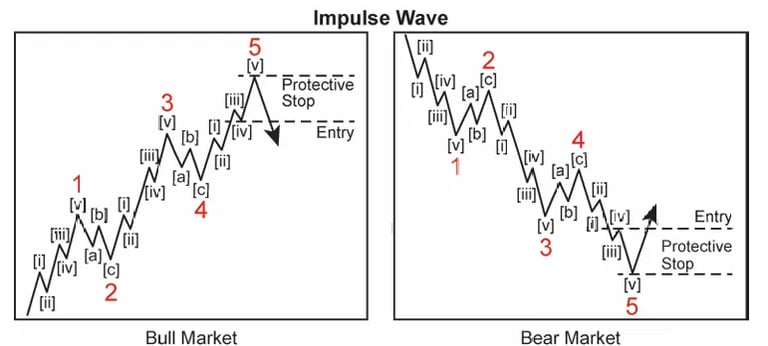
When an impulse wave completes, the market typically transitions into a corrective phase. Rather than attempting to pick tops or bottoms, confirmation focuses on structural failure.
A practical approach involves:
Waiting for price to move beyond the previous Wave 4 of a lesser degree before executing trade
Treating that break as evidence that the impulse has ended
Using the impulse extreme as a clear invalidation level
This approach shifts execution from anticipation to confirmation.
Approaches to Ending Diagonal Structures
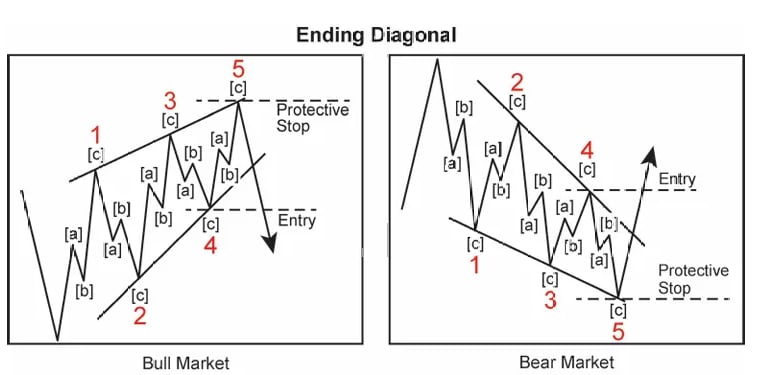
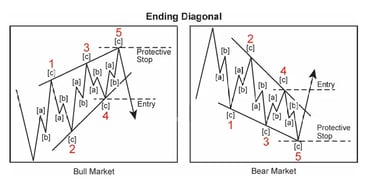
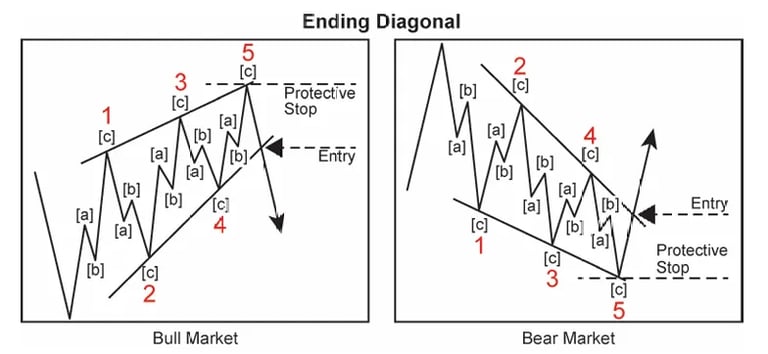
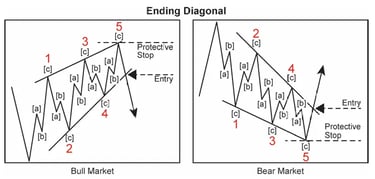
Ending diagonals often appear near the conclusion of a trend and can offer reversal opportunities. However, their overlapping nature makes patience especially important.
A conservative approach waits for:
A clear break beyond Wave 4 before executing trade
Stop placement at the structure's high point
A more aggressive approach may enter at a break of the trendline connecting Waves 2 and 4. Regardless of style, the principle remains the same: structure must fail before the trade is valid.
Trading Zigzag Corrections
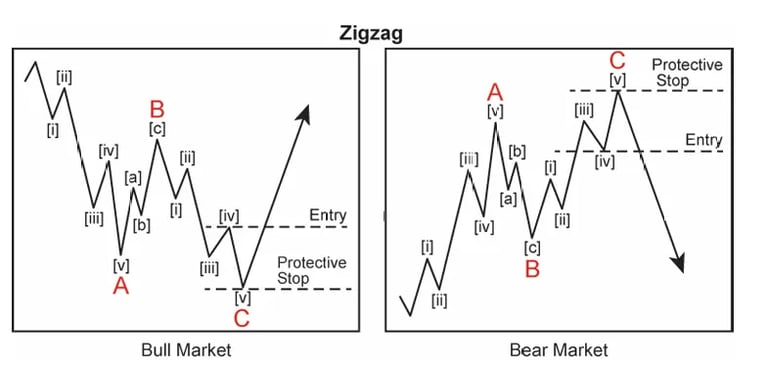
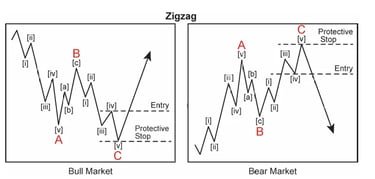
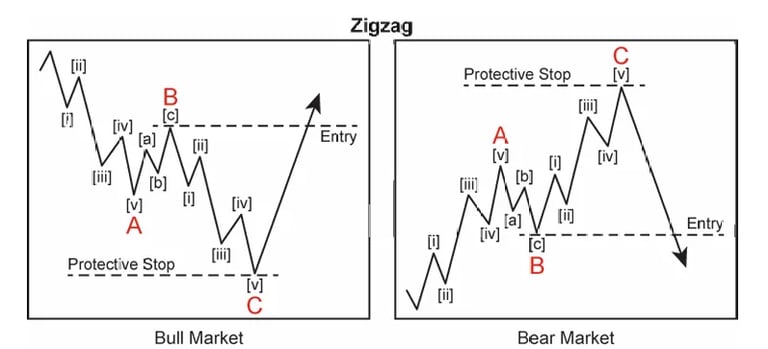
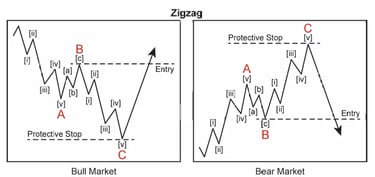
Zigzags are sharp corrective structures that typically resolve quickly.
A conservative approach waits for:
Price breaks beyond the origin of Wave 4 of Wave C before executing trade
Stop placement at the termination of Wave C
An ultra-conservative approach waits for:
Price breaks beyond the origin of Wave B before entering trade
The emphasis remains on letting the correction reveal itself fully before acting.
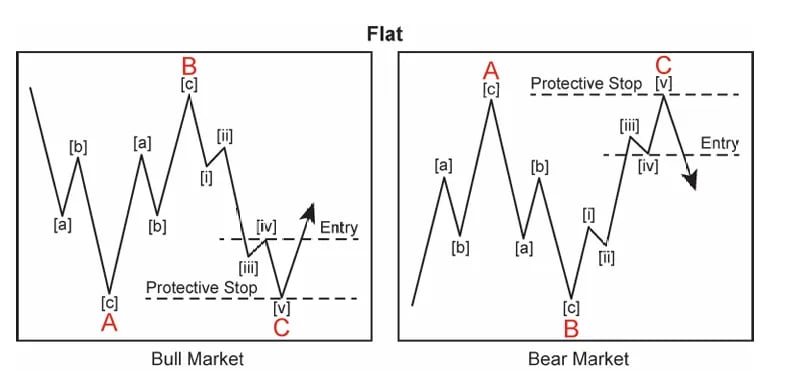
Flat Corrections and Structural Completion
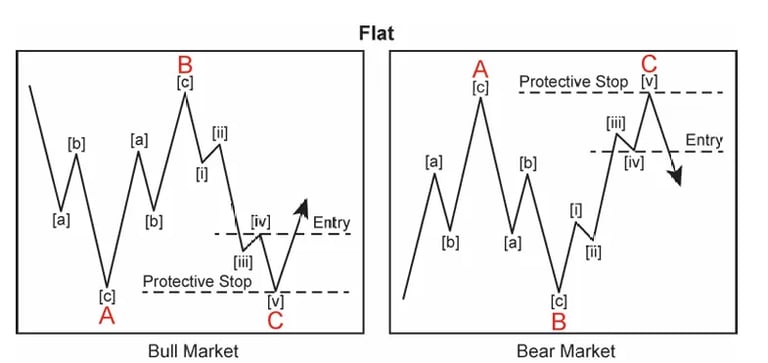
Since wave C of a flat subdivides into five waves, treat it like an impulse wave completion. Wait for prices to exceed wave (iv) of C before entering.
Trading Triangle Expansions
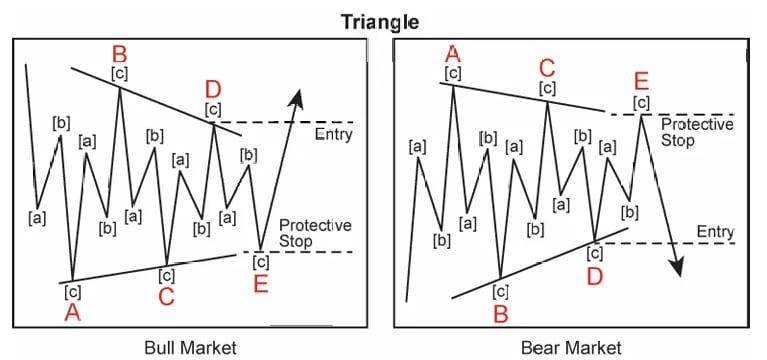
Triangles represent consolidation rather than direction. Their resolution often produces strong moves, but false breaks are common.
A confirmation-based approach waits for:
A decisive break beyond the trendline connecting Waves B and D
A well-defined stop at the termination point of Wave E.
Triangles reward patience more than speed.
The Psychological Role of Confirmation
Every confirmation-based rule serves a psychological purpose.
Waiting for the market to validate an idea:
Reduces emotional attachment to analysis
Shifts focus from prediction to response
Encourages selective participation
This approach transforms Elliott Wave from a forecasting exercise into a disciplined decision-making process.
How This Lesson Fits the Broader Framework
This lesson bridges structure and discipline. It shows how Elliott Wave analysis translates into execution rules that respect uncertainty.
The next lesson explores how risk management and psychology reinforce these execution principles, ensuring that even strong setups are handled consistently and sustainably.
Elliott Wave Trading Course Series
This article is part of the Elliott Wave Trading Course.
Lessons in this series:
Part 2: The Simple Market Structure That Explains Every Price Move
Part 3: Why Elliott Wave Provides More Context Than Traditional Indicators
Part 4: The Elliott Wave Phases That Offer the Clearest Trading Opportunities
Part 7: Corrective Wave Structures and Fibonacci Relationships in Elliott Wave
Part 8: Applying Elliott Wave Structure with Confirmation-Based Trade Execution
Part 9: Risk Management and Psychology
Disclaimer:
Trading forex involves significant risk and may not be suitable for all investors. Past performance is not indicative of future results. The information and signals provided on this website are for educational purposes only and should not be considered financial advice. You are solely responsible for your trading decisions and any resulting financial losses. Please consult with a licensed financial advisor before engaging in forex trading.
© 2026. All rights reserved.
Trading Resources: [Market Insights] [Elliott Wave Course] [Forex Signals Guide] Tools: [Economic Calendar ][Position Size Calculator] Support: [FAQ] [Contact] [New To Telegram?]